

Ears gone red, itchy and grumpy after a new pair? Nickel's usually the one to blame. Here's what nickel free earrings really are, what the UK rules say, what to look for on a product page, and the pairs we'd point you to.
- Nickel is the usual culprit behind itchy, sore ears.
- Hypoallergenic and nickel free aren't the same thing. If nickel's the problem, make sure it actually says nickel free.
- UK law already limits how much nickel jewellery can give off, and the bit that goes through the ear has the strictest limit.
- Every Delilah earring is hypoallergenic and tarnish free, and lots of our pairs are nickel free too. We'll show you which.
Why nickel is usually the culprit
Nickel is cheap, tough and turns up in loads of metals, so it's in a lot of bargain jewellery. It's also one of the most common causes of skin allergies, and earrings are a classic trigger. The post sits in the skin all day, every day.
Plating doesn't always save you either. Once a cheap finish rubs through, whatever's underneath ends up against the skin. That's when the itching starts.
Nickel free vs hypoallergenic: what's the difference?
They get used like they mean the same thing. They don't. Here's the plain English version.
The seller says there's no nickel in the earring.
Best for: anyone who knows nickel sets them off.
Watch out: it's a claim, so look for it in writing before you buy.
Made to be less likely to cause a reaction.
Best for: sensitive ears in general.
Watch out: there's no legal definition, and it doesn't automatically mean zero nickel.
Gives off less nickel than the legal limit.
Best for: most people. Anything sold legally in the UK should hit this.
Watch out: very sensitive ears can still react to small amounts.
What the UK rules say
Nickel in jewellery is restricted under UK REACH. The rules aren't about whether there's any nickel in the metal. They're about how much comes off it onto your skin over time.
The bit that goes through the hole, plus the back that holds it in place.
Limit: less than 0.2 micrograms per square centimetre per week.
In short: the strictest limit, because it sits inside the piercing.
Jewellery that touches the skin for a long time, like the front of a stud or a necklace.
Limit: no more than 0.5 micrograms per square centimetre per week.
In short: still low, just not quite as strict.
So a legal earring sold in the UK shouldn't give off much nickel at all. The catch? Super sensitive ears can still react, and cheap pairs from random online marketplaces don't always play by the rules. If you know nickel's a problem, look for pairs that clearly say nickel free. Source: Trading Standards guidance on nickel in jewellery.
Signs ears are reacting
- Itchy lobes you can't stop fiddling with.
- Red or sore skin around the hole.
- A rash or little bumps where the earring sits.
- Dry, flaky or crusty skin around the piercing.
- Puffy or warm ears.
We're earring people, not doctors. If ears are sore, swollen or weepy, or just not settling, get them looked at by a pharmacist or GP. If it's a fresh piercing, speak to your piercer before taking anything out.
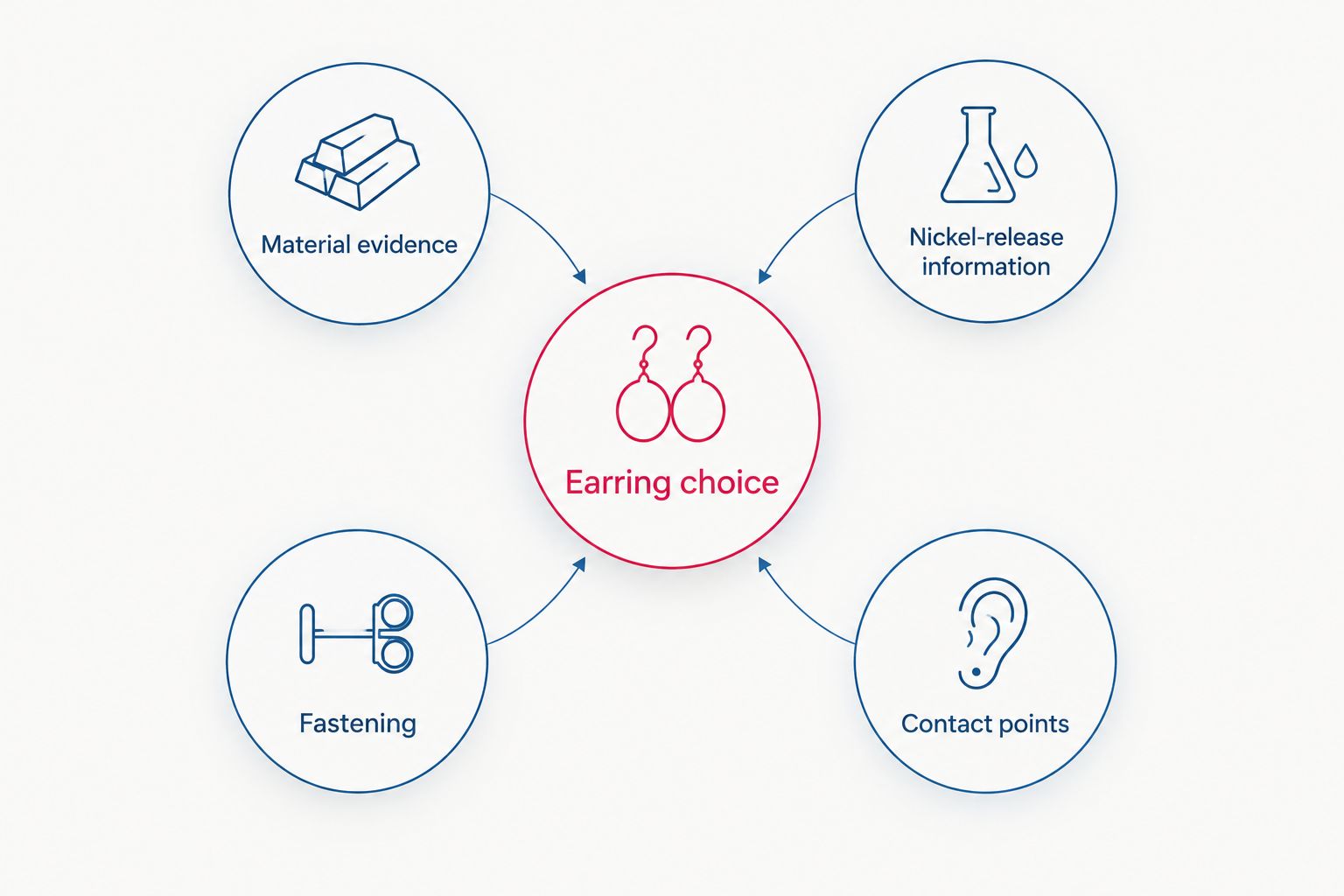
What to check before you buy
Pretty is the easy bit. These are the things that decide whether sensitive ears stay happy.
Here's what our backs look like from behind. Both twist on, so they stay put, and both are made from the same hypoallergenic, tarnish free materials as the front.


Want the full lowdown on backs? Have a read of our flat back vs screw back vs butterfly back guide.
So, are Delilah earrings nickel free?
Straight answer: every Delilah earring is hypoallergenic and tarnish free, and made with sensitive ears in mind. Lots of our pairs go one better and are nickel free too. That includes the Red Bow and Tall Rainbow flat backs, the Crystal Flutter Screw Back Studs, our Heart Huggies and the Twinkle CZ Diamond Huggies.
A few of our classics, like the Star and Classic Heart flat backs, are hypoallergenic and tarnish resistant but don't claim to be nickel free. So if nickel free is a must, check the description of the pair you've got your eye on, or just drop us a message and we'll tell you.
Our picks for sensitive ears
A mix of comfy kids flat backs, a stay-put screw back and a couple of huggies for grown ups too. All in stock right now.


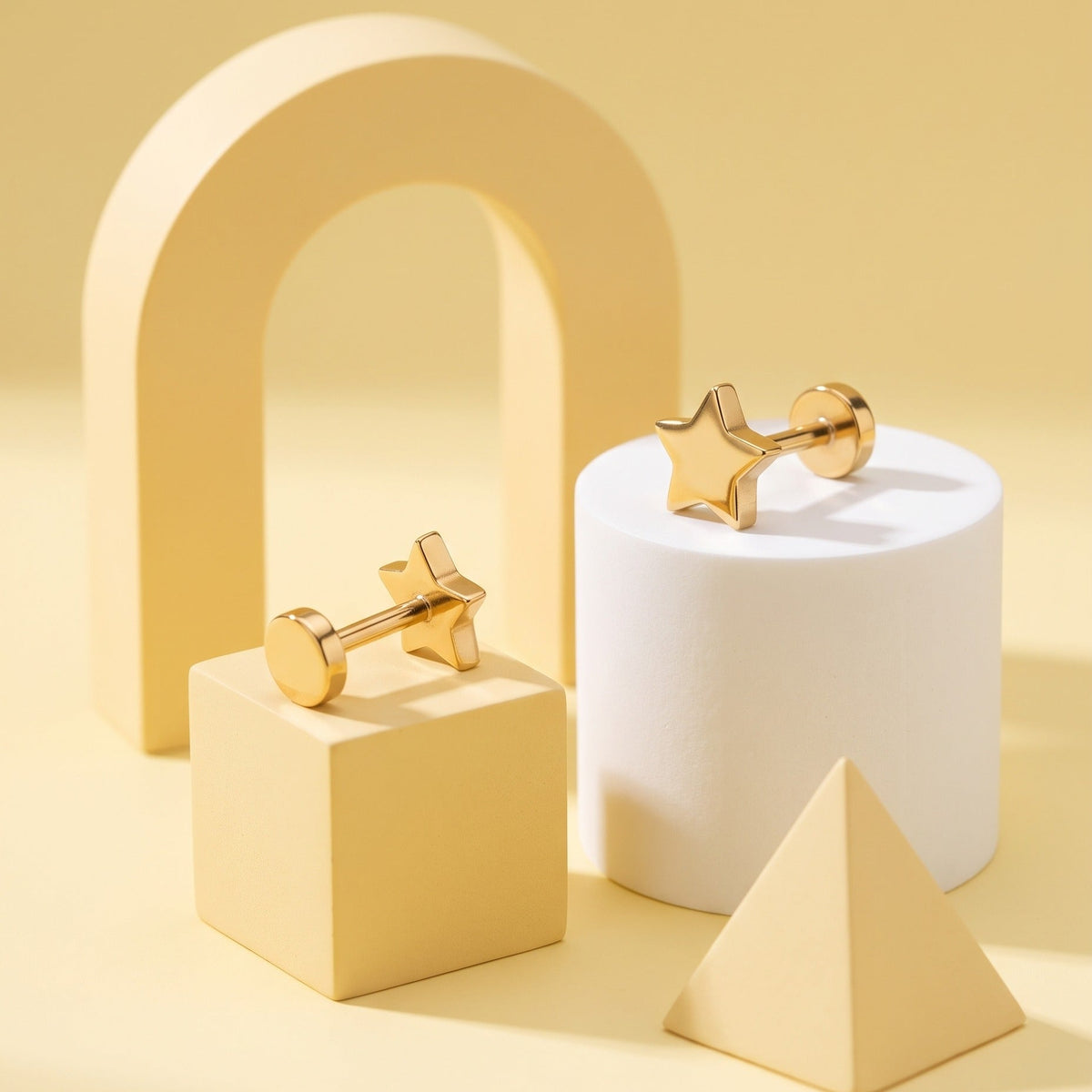
- Star Flat Back Studs. A tiny 4 mm star with a twist-lock flat back. Hypoallergenic and tarnish resistant, and one of our bestsellers.
- Classic Heart Flat Backs. A simple 6 mm heart in stainless steel with a twist-lock flat back. Works on kids and grown ups alike.
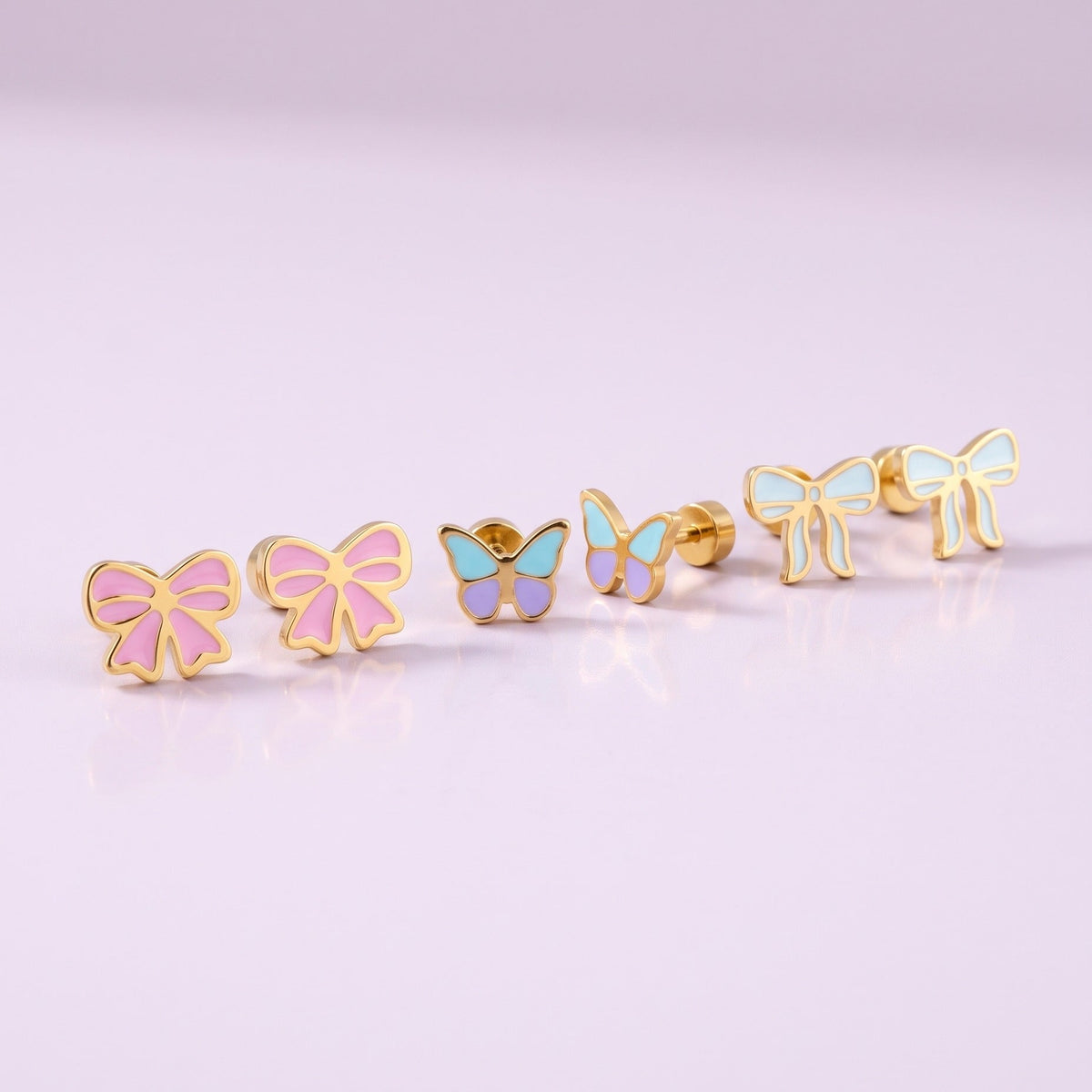
- Red Bow Flat Back Studs and Tall Rainbow Flat Back Studs. Gold plated stainless steel and nickel free.


- Crystal Flutter Screw Back Studs. A 6 x 6 mm crystal butterfly in 18k PVD gold. Hypoallergenic stainless steel and completely nickel free.
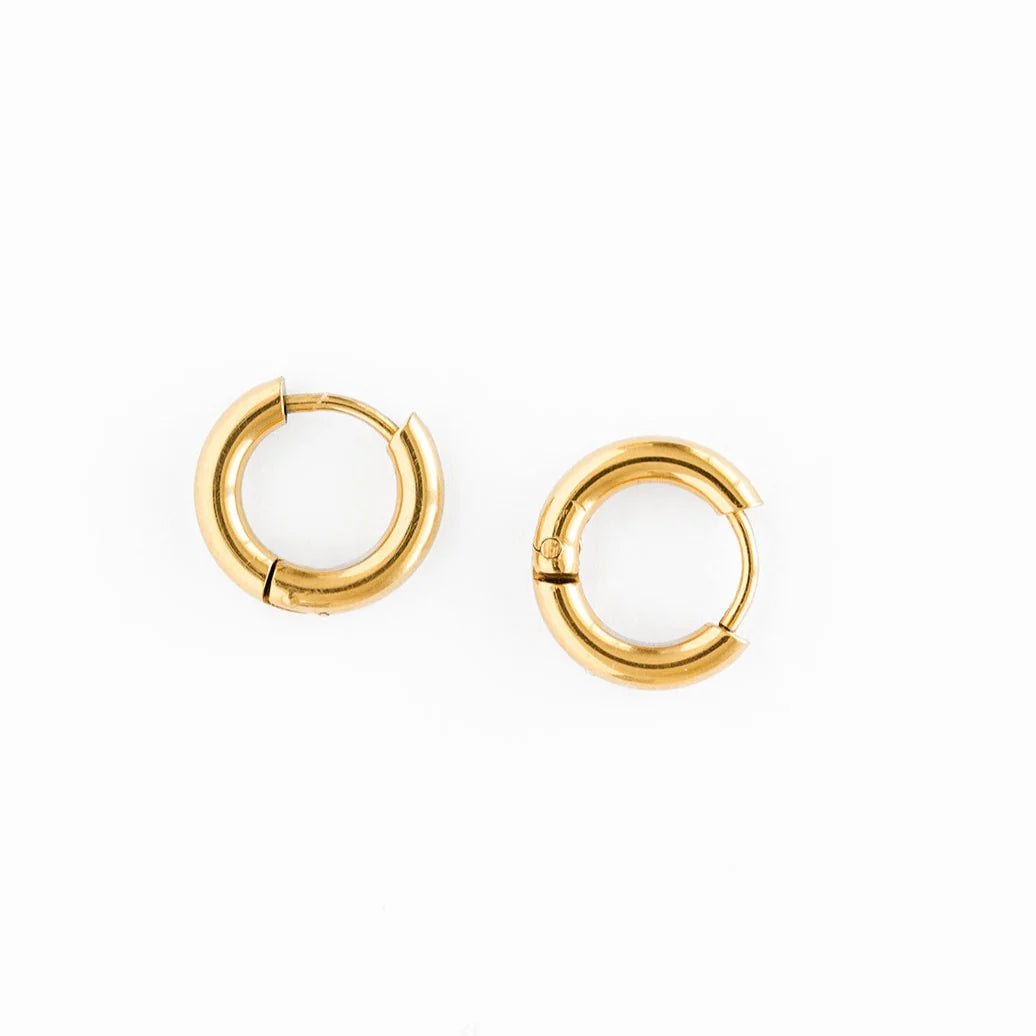
- Heart Huggies. Little heart charms on a huggie hoop, for the kid who's decided studs are for babies. And yes, they're nickel free.
- Twinkle CZ Diamond Huggies. Our grown up pick. A gold hoop with a dainty CZ charm, tarnish free and nickel free. Great for teens too.
Which one's right for you?
Shop earrings for sensitive ears


Your questions, answered
Are Delilah earrings nickel free?
Every Delilah earring is hypoallergenic and tarnish free. Lots of our pairs are nickel free too, like the Red Bow and Tall Rainbow flat backs, Crystal Flutter Screw Back Studs, Heart Huggies and Twinkle CZ Diamond Huggies. A few classics, like the Star and Classic Heart flat backs, are hypoallergenic and tarnish resistant but don't claim nickel free. If nickel free is a must, check the product description or drop us a message.
Does hypoallergenic mean nickel free?
Not automatically. Hypoallergenic means made to be less likely to cause a reaction, but there's no legal definition. Nickel free is a more specific claim. If you know nickel is the problem, look for nickel free written in the product description.
What are the UK rules on nickel in earrings?
Nickel in jewellery is restricted under UK REACH. It limits how much nickel can come off the metal onto skin. The bit that goes through a piercing has the strictest limit, under 0.2 micrograms per square centimetre per week. Other jewellery that sits on skin for a long time can release no more than 0.5.
Is stainless steel nickel free?
Not always. Plenty of stainless steel has some nickel in the mix, so stainless steel on its own doesn't tell you much. Look for nickel free in the product description, or ask the seller.
Why do cheap earrings make my ears itchy?
Nickel is the usual suspect. It's in loads of cheaper metals, and plating can wear through and leave the base metal touching your skin. If it keeps happening, chat to a pharmacist or GP to find out what's going on.
Can I wear nickel free earrings in a new piercing?
Ask your piercer. They'll tell you when it's healed enough to swap, and what to wear until then.
What should I do if my ears react?
We're earring people, not doctors. If ears are red, sore, swollen or weepy, or just not settling, get them looked at by a pharmacist or GP. If it's a fresh piercing, speak to your piercer before taking anything out.

Share:
Hypoallergenic Earrings for Women: Comfy Picks for Sensitive Ears
Waterproof Earrings for Kids: Swimming, Showers and Bath Time