


Want to know your birthstone? Find your month below. We've put every birthstone, its colour and what it's traditionally said to mean into one easy chart, so you can settle that kitchen table debate in about ten seconds. There's a free printable version too, for the bedroom or classroom wall.
- January: garnet
- February: amethyst
- March: aquamarine
- April: diamond
- May: emerald
- June: pearl, moonstone or alexandrite
- July: ruby
- August: peridot
- September: sapphire
- October: opal or tourmaline
- November: topaz or citrine
- December: turquoise, tanzanite or zircon
Want it on the wall? Grab our free printable birthstone chart.
The birthstone chart
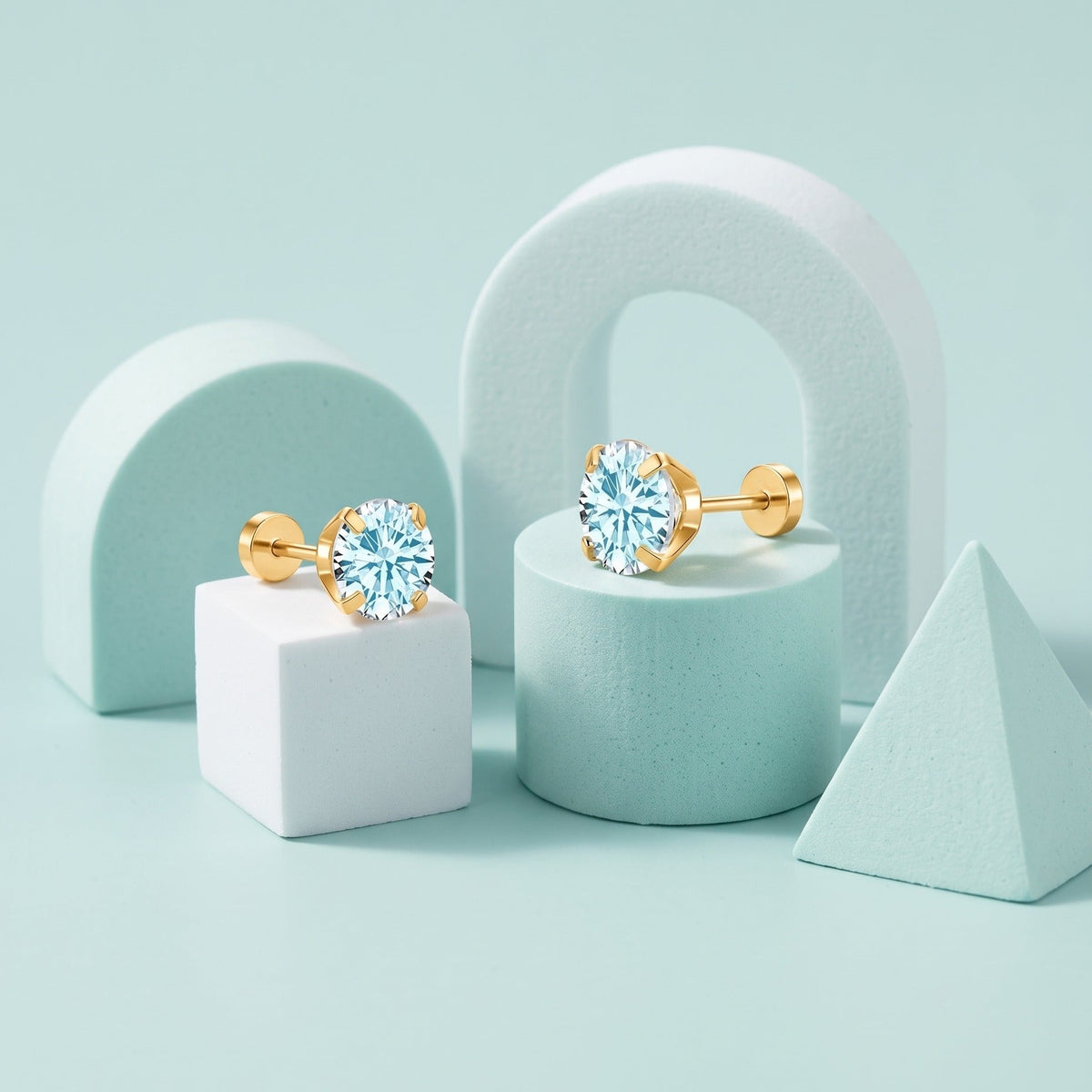
Every month, its stones, the colour to look for and what it's traditionally linked with. The little white box on each card shows the colour we use in our own birthstone studs, in case you fancy wearing yours.
Meanings are the traditional ones that get passed around, not science. Lovely to know, but nobody's going to check your earrings against your birthday.
What is my birthstone?
Your birthstone is simply the gem linked to the month you were born. Find your month, and that's your stone. Easy.
Where it gets a bit muddled is that there's more than one list:
The one most UK jewellers use. It started with the National Association of Goldsmiths (now the National Association of Jewellers) back in 1937 and has been tweaked since. It's where the classic picks like pearl for June, opal for October and topaz for November come from.
A newer list from the American jewellery trade. It keeps most of the classics but adds a few extras, like alexandrite for June, tourmaline for October, spinel for August and zircon for December.
When people say traditional, they usually mean the older, classic stones for each month. The ones your nan would recognise.
The short version? January to May and September barely change between lists. The months that wobble are June, October, November and December. If two lists disagree, you can happily claim both.
Birthstone colours at a glance
Sometimes you just want the colour. Maybe it's for a party theme, a bedroom, or a kid who only cares that theirs is purple. Here's every birthstone sorted by colour.
January garnet, July ruby, October pink tourmaline
February amethyst, June alexandrite
March aquamarine, September sapphire, December turquoise and tanzanite
May emerald, August peridot
November topaz and citrine
April diamond, June pearl and moonstone, October opal


Months with more than one birthstone
Only January and February keep it simple with one stone each. Most other months have a backup on one list or another, but these are the four people ask about most:
Pearl, moonstone and alexandrite. Pearl and moonstone are the classic UK picks. Alexandrite is the modern extra, famous for changing colour in different light. We went with an alexandrite colour stone because it's a bit different.
Opal and tourmaline. Opal is the traditional one, all milky rainbow flashes. Tourmaline comes in loads of colours, and pink tourmaline is the favourite. That's the one we use.
Topaz and citrine. Both are warm, golden yellows, so it's hard to go wrong. We use a citrine colour stone. Sunshine yellow for the dark evenings.
Turquoise, tanzanite and zircon. Turquoise is the sky blue classic. Tanzanite is a violet blue that was only discovered in the 1960s. Zircon is the modern extra, usually a bright blue.
Our December birthstone earrings use an onyx colour stone. Onyx isn't one of the traditional December birthstones (those are turquoise, tanzanite and zircon). We picked a sleek black because it goes with every party outfit and school uniform going. If your December baby wants a proper blue, our sapphire colour or aquamarine colour studs are a lovely swap.
The other months have extras too. March has bloodstone, April has rock crystal, May has chrysoprase, July has carnelian, August has sardonyx and spinel, and September has lapis lazuli. They're just much less common in jewellery, so most people stick with the main stone.


Birthstone gift ideas
A birthstone is about as personal as a little gift gets. It's their stone, and kids especially love telling everyone about it. A few ideas that always go down well:


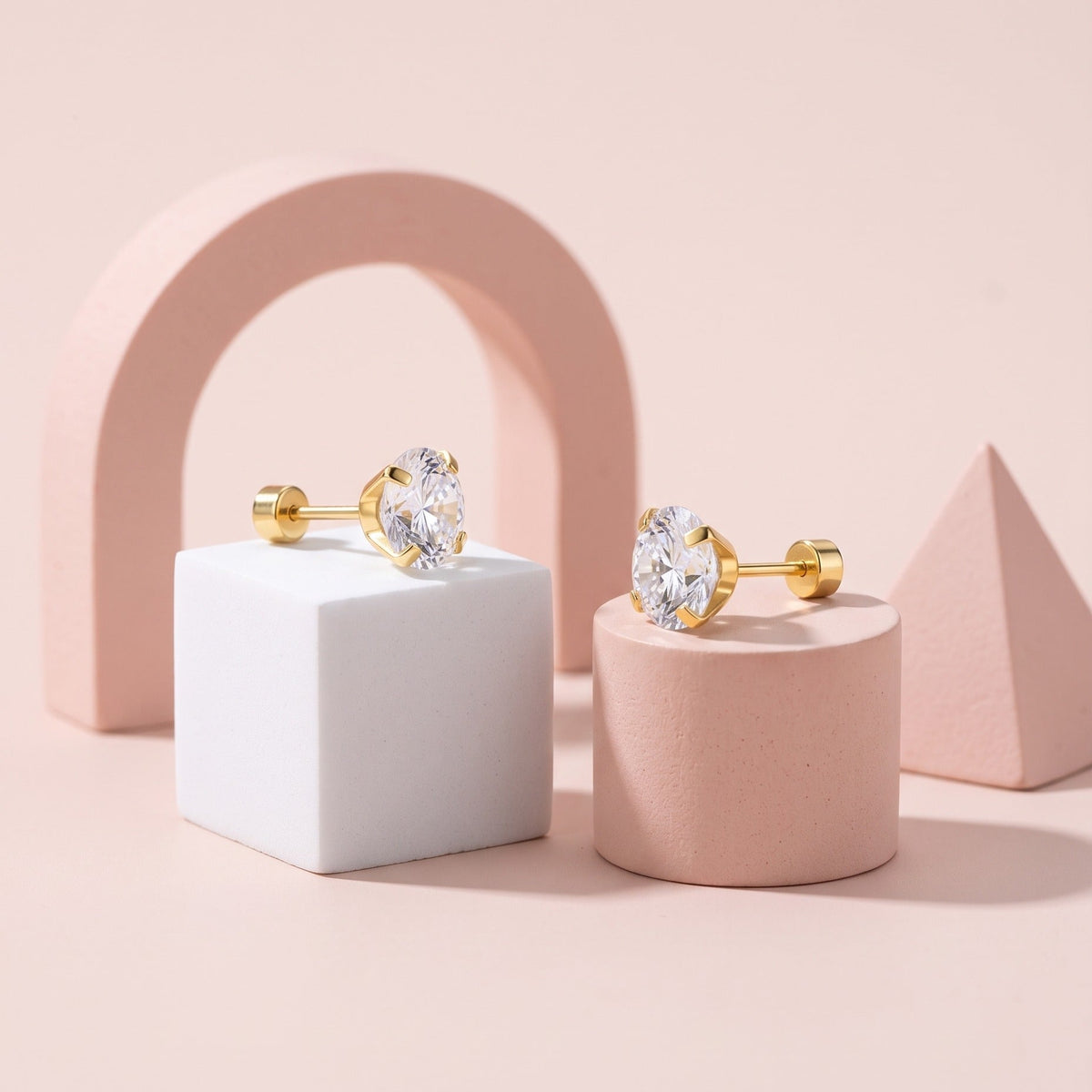
- Tiny 3mm stones in each month's colour
- Twist-lock flat back, so nothing pokey behind the ear
- Hypoallergenic, tarnish free and waterproof
- 18k gold plated or silver, gift boxed, with a 2-year warranty
Free printable birthstone chart
All 12 months on one colourful sheet of A4, with each stone, its colour and its meaning. Teachers, it's handy for a birthday display. Parents, it's a nice one for the bedroom wall. Free to print, no sign up.
Get the printable chartYour questions, answered
What is my birthstone?
It's the stone for the month you were born. January is garnet, February amethyst, March aquamarine, April diamond, May emerald, June pearl, July ruby, August peridot, September sapphire, October opal, November topaz and December turquoise. Some months have extra stones too.
What colour is each birthstone?
Garnet is deep red, amethyst purple, aquamarine sea blue, diamond clear, emerald green, pearl creamy white, ruby red, peridot lime green, sapphire deep blue, opal milky rainbow, topaz golden yellow and turquoise sky blue.
Why do some months have more than one birthstone?
Because there's more than one list. The UK list and the newer American list mostly agree, but each adds a few of its own. That's why June can be pearl, moonstone or alexandrite, and December can be turquoise, tanzanite or zircon.
What's the difference between traditional and modern birthstones?
Traditional birthstones are the older, classic stones for each month. Modern lists keep most of those and add a few newer options, like alexandrite for June, tourmaline for October and zircon for December.
What is the December birthstone?
Turquoise, tanzanite and zircon. Our own December earrings use an onyx colour stone, which is our pick rather than a traditional December birthstone.
Do you have to wear your own birthstone?
Not at all. Loads of people wear a loved one's stone, or just pick their favourite colour. There are no birthstone police.
Are Delilah birthstone earrings real gemstones?
No. Each pair has a 3mm stone in that month's colour, like garnet colour for January. They're hypoallergenic, tarnish free and waterproof, with a twist-lock flat back, in 18k gold plated or silver for £22.
Share:
Birthstone Earrings for Kids: Find Their Stone